On Oct. 15, 2024 food activists marched to Kellogg’s headquarters to deliver over 400,000 signatures petitioning the company to remove artificial dyes from its ingredients. This is a major movement garnering the support of hundreds of thousands of Americans, many of whom are concerned for the health of their children.
The petition is part of a larger push to reduce chronic disease and improve overall health in America by confronting the country’s food system.
I’ve spent my fair share of time listening to podcasts about seed oils and artificial dyes, sending them to friends and family for discussion, and researching which snacks are the best options for my kids. Ultimately, I’m on board with the overall premise of this push for healthier food. There are few things more important than ensuring our kids have the best possible shot at living a healthy life, in the short and long-term.
The concern that is beginning to wiggle around in the back of my mind, though, is that through the intensity of language used in this food activism movement, we may be unintentionally replacing one cause of chronic illness (“toxic” ingredients) with another (stress).
I am also concerned that we may be unintentionally planting a fear of food, which can lead to disorders like orthorexia, into some of the youngest members of Gen Z and into the whole of Gen Alpha.
Introducing Terms:
Orthorexia nervosa is “a disordered eating pattern where people obsessively focus on eating ‘pure’ or ‘clean’ foods to achieve optimal health,” according to Eating Recovery Center.
Some people with this disorder acquire a sort of obsession with avoiding foods they believe will increase their likelihood of getting cancer or some other chronic disease, which is a huge part of the conversation taking place in today’s culture.
The point is not whether this argument is true. The point is that we need to be incredibly careful how we speak about this issue in front of our kids.
To be frank, I have no evidence for the ideas I am presenting here. If ever there will be evidence to be found, it will likely not be for years to come. This article is essentially just an inside look into the concerned mind of a mother living through a very strange time in food history and trying to navigate it in the healthiest, most sustainable way possible. I imagine I can’t be the only person feeling a little overwhelmed by it all.
When Everything is Off-Limits:
A push towards more whole, nutritious, natural foods and away from ultra-processed foods is difficult to disagree with. Innately, it makes sense that our bodies need the fundamental basics: meat, dairy, produce, grains.
The current push for a healthier America is not just an attack on ultra-processed foods, however. Now, it seems, almost every food is being brought into question.
“Is your beef pasture-raised? Are your eggs free-range? Make sure there aren’t artificial hormones in your milk! Produce has cancer-causing pesticides on it unless you get organic (there are also pesticides used on organic produce, come to find out, but more on that in a later article, maybe). So if you buy produce, you need to make sure it is locally farmed or has the organic label, but sometimes the organic label can be bought, so you really need to be careful you’re not getting duped!”
How overwhelming! And frankly, it is very difficult as a mother to not be affected by fear when hearing and reading all the potential risks these foods are supposedly causing to our health, and more importantly, our kids’ health.
It is particularly difficult to override fear when “poison” and “toxic” are words regularly used to describe ingredients in ultra-processed or conventionally farmed foods. Those are very serious words, and unless she has some sort of insider information, any mother would find it difficult to simply look past them.
I have a serious problem with the use of the word “poison” in particular. This is a word that induces a certain level of fear for the thing it describes.
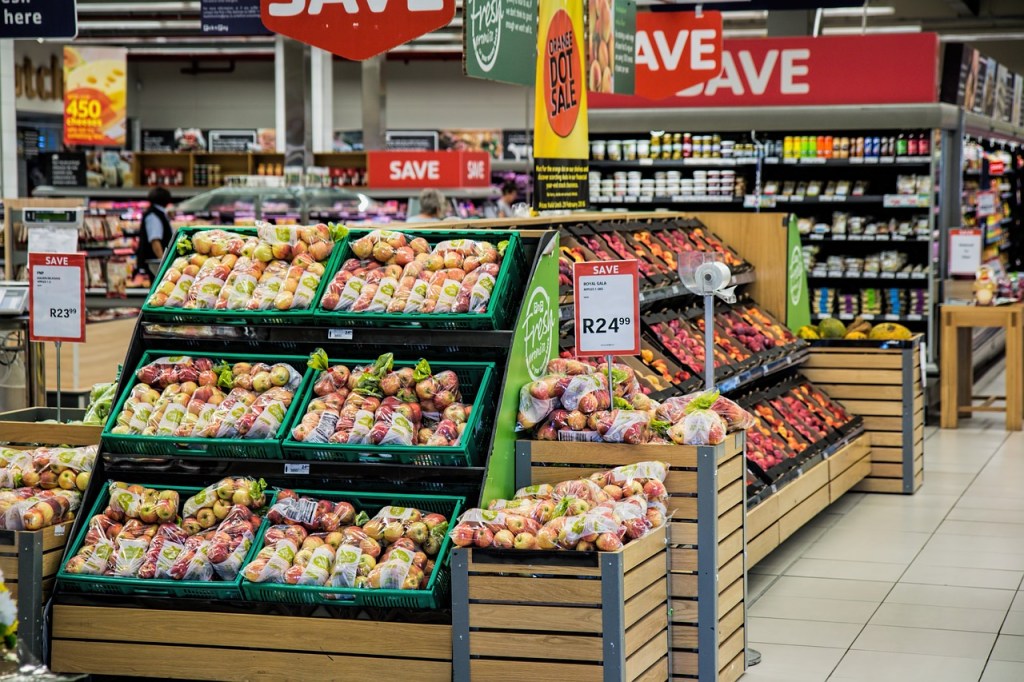
The other day, I saw a post on Instagram where someone put post-it notes that said “poison” on them onto cereal boxes in the grocery store. Is this not…a bit excessive? This is an opinion, but I really do feel like this strategy in particular is primarily aimed at promoting fear.
It paints the picture that to eat said “poisonous” food would be inherently worse than to not eat anything at all. If someone set a vial of poison in front of me, and I was starving, it would just kill me faster if I chose to drink the poison. But if someone set a bowl of Froot Loops in front of me, it would objectively benefit me to eat it rather than starve.
If we follow calling Froot Loops “poison” to its natural conclusion, we will reject eating them even if our life depends on it because it would not fuel us but kill us faster.
Now I understand that the argument is primarily that the ingredients in these foods over time can cause harm, and I am not arguing against this. I personally choose not to feed Froot Loops to my children because the fuel they provide is of sadly low quality. My point though, is that sometimes, the only option presented to us, or the only option presented to our children, might be a food that is just that, not of the highest quality.
I would always rather my child eat than refuse food because they are afraid of it. And this is the path I am concerned we may be going down if we are not more careful with our language surrounding food.
It seems we may be losing our balance in this current fight for better health. We are veering away from the diet culture of the previous generation (good), but in exchange, we are seemingly ushering in a “food is poison culture,” which has the potential to be a very different, very insidious type of dangerous if we are not careful.
How we speak about food is crucial. How we frame our concern around certain ingredients, the words we use, and most critically, whether we embrace a spirit of fear or of power in regard to what we eat, I believe will significantly influence the relationship our children have with food in the days to come.
Food is Fuel:
Food is fuel. Some food is better quality fuel than others. And even ultra-processed food is better fuel than no fuel at all.
We can teach our children how to regularly fuel their bodies well, how to understand nutrition and enjoy quality food, without instilling a fear of poorer quality foods. Personally, I am still figuring out how to do this well, but I strive for that target.
Again, I agree overall with what is being pushed by food activists right now. I agree that the American population is experiencing tremendously high levels of chronic disease. I agree that our high intake of ultra-processed foods is not helping the cause and is likely contributing to it in a significant way.
Something I am still actively looking into is big agriculture (dairy, beef, produce). On a personal level, I have yet to really reach a confident conviction about organic vs. conventional farming practices, the use of pesticides in conventional farming vs. organic, etc. This is a massive conversation, and there is a lot of information to dive into.
Despite my need to do more research on meat, dairy, and produce, what I know is true, what seems to be inarguable, is that our culture would benefit tremendously from eating more produce in general, regardless of whether it is organic. We need to eat more meat, regardless of whether it’s pasture-raised. We need to move our bodies and forego the sedentary lifestyle that has taken over so much of American culture. These steps alone would decrease obesity in America, which would in turn, significantly decrease the tidal wave of chronic disease.
Ideally, our kids would always and only have access to foods that fuel them in just the way their bodies need. That would be fantastic. And I wholeheartedly believe that as parents, we should be doing our very best to provide nutritious food for our kids whenever we can.
The reality of life, though, is that we will not always be home. Our kids will not always be home. Or at least hopefully, they won’t be. Hopefully, they will have playdates with a wide variety of people when they are small, and hopefully, they will go to the movie theater with those friends one day. Hopefully, they will go out to eat, and hopefully, they will enjoy meals inside other people’s homes.
What happens when we have trained our kids to question everything they put into their body? And I mean everything, not just ultra-processed food but also conventional dairy products, conventionally farmed produce, and factory eggs.
The message being sent to American culture at-large is that the food that will inevitably surround kids at their friends’ houses, in school, and at restaurants is chocked full of literal poison.
There was a reel posted to Instagram recently of a young girl going through the grocery store with her mother. It was supposed to be a funny video of the child grabbing certain foods off the shelves and imitating her mother as she explained why each of the foods was toxic, poisonous, or full of artificial growth hormones. It did not strike me as funny, and I think that was the reaction from most viewers, as the comments for the video had been turned off.
If we instill in our children the understanding that certain foods will give them cancer or poison their bodies, then in my mind, it would make sense that some of those kids would go on to choose no food over the offer of Froot Loops. Starvation over poison.
Disorders like orthorexia allow for little to no give in regard to food, an attitude many social media influencers are currently pushing. There is little to no give. Certain foods are either pure or toxic, good or evil.
Ultimately, people with orthorexia will often sacrifice calories and nutrients for the sake of only taking in “clean” ingredients. Over time, this can be fatal.
Being fearful of the ingredients in certain foods is different than being mindful of ingredients.
If we treat food as toxic. If we talk about it as being toxic, our children will absolutely pick up on that. Some of them will likely internalize it. Some of them may carry it with them for a very long time.
The red flags in my mom brain are going haywire.
A Self-Fulfilling Prophesy?
Fear causes stress. Chronic stress causes chronic disease, and this all feels a little bit like a self-fulfilling prophecy.
When fear becomes chronic, stress becomes chronic, and when stress becomes chronic, this can negatively affect pretty much every part of the body including the musculoskeletal, respiratory, cardiovascular, endocrine, gastrointestinal, nervous, and reproductive systems, as detailed by the American Psychological Association.
It seems critical at this apparent turning point in our country’s conversation over nutrition and ingredients, that we hone in on the importance of viewing food with an empowered perspective, not a fearful one. Fear is a good motivator, but it is not a healthy sustainer for parents or for children.
We need to train our kids to have a spirit of power with regard to food, not fear. And that’s what I’m still figuring out how to navigate in this American food culture that, right now, feels saturated with the latter.
If we start this conversation now about how to instill healthy relationships with food in our children, then maybe we can stem the tide of the potentially negative repurcussions of the “food is poison” age.
This is a conversation I want to get started in the motherhood community in particular. How can we support one another as we navigate this modern food terrain? What alternative language can we use? What ideas can we give each other on how to raise kids who know how to fuel their bodies well, are confident in what they eat, knowledgable about nutrition, and able to enjoy food without fear?
I agree with the premise of making America healthier, but I am struggling with the method and language used to get there.
What are your thoughts on all of this? If you think I am completely off-base, let me hear it! I want to start this conversation and would be more than happy to be challenged in my concerns.
How can parents balance feeding their kids healthy foods and educating them on proper nutrition while cultivating a healthy relationship with food for their child? Comment below!
If you are a Nutritionist, Eating Disorder Specialist, Farmer, Food Scientist or someone else who specializes in something related to the food industry, I would love to hear from you as well. Please feel free to comment or email kitchencounterconversations@gmail.com.
 Kitchen Counter Conversations
Leave a comment