
[This article was updated on Oct. 8 to include Dr. Joe Schwarcz’s perspective, a quote from registered dietician, Julia Zumpano, and information from the study, “Toxicology of food dyes.”]
On September 23, 2024 a roundtable discussion titled, “American Health and Nutrition: A Second Opinion” took place in Washington, D.C. during which various witnesses testified about how the food industry is contributing to the chronic disease epidemic in the United States.
A key component of this conversation about the processed food industry is artificial dyes, typically derived from petroleum, which for years have been suspected of causing behavioral issues in children with sensitivities.
While the potential harms posed by artificial dyes are breaking through into the mainstream now, the conversation, particular about red dye, has been going on since at least 1976.
In 1976, Red No. 2 was banned from use in food in the United States due to “suspicion for 15 years as being possibly carcinogenic or toxic to the reproductive system,” according to the U.S. Government Accountability Office.
Various other forms of red dye remain in circulation including Allura Red AC, Red 40, Red 40 Lake, FD&C Red no. 40 Aluminum Lake, FD&C Red no. 40, E129, CI Food Red 17, and INS no. 129 despite growing concerns from food activists, parents, scientists, and doctors.
“Research does indicate that children who consume synthetic food dyes, including red dye 40, can experience hyperactivity and other neurobehavioral issues,” wrote Nicole Washington for MedicalNewsToday in 2022.
“In 2011, even the FDA acknowledged the growing body of evidence that red dye is a problem that’s linked to erratic behavior,” said health coach and registered nurse Tana Amen on the Change Your Brain Every Day podcast in 2021.
“But they didn’t get rid of it,” she continued.
These dyes “can cause ADHD symptoms,” in children who experts suspect may be deficient in zinc and iron, are experiencing “chemical changes in the brain,” or who have an allergic reaction to the dyes, which results in inflammation, Washington explains.
While the United Kingdom and Switzerland banned Red 40 due to health concerns, the FDA determined there was not sufficient scientific evidence to support a ban.
In 2016, The Center for Science in the Public Interest (CSPI) called on the FDA to “ban all synthetic dyes in food and beverages, since they do not meet the legal safety standard.”
“Establishing a cause-effect relationship between food dyes and hyperactivity or other adverse behavioral effects is far more difficult than establishing whether food dyes meet the legal definition for safety considering the evidence on behavioral effects,” said CSPI, arguing that the FDA is too focused on proving the harm than on the evidence that there is potential for harm.
Red 40, Yellow 5, Yellow 6, and Blue 1 were the most urgently dangerous dyes, according to CSPI, because they have been “shown to cross the blood-brain barrier.”
Despite countless reports of behavioral problems in children related to the intake of these synthetic dyes, all four of them, along with many more, are still regularly and legally used in food and drugs in the U.S.
CSPI claims that the FDA has argued “that the fact that some children are unusually sensitive to dyes was a reason to dismiss safety concerns.”
On the Change Your Brain Every Day podcast with Dr. Daniel Amen and Tana Amen, they discuss how red dye specifically “can cause all sorts of psychiatric” issues including unusual aggression, hyperactivity, erratic behavior, violence, and anxiety in children.
Dr. Amen mentions one case in particular where he had the parents do an elimination diet for their child who was exhibiting out-of-character behavior. When the child went off red dye, his behavior regulated.
At Dr. Amen’s clinics, brain SPECT imaging is used to “evaluate regional cerebral perfusion (blood flow) and activity in the brain” to determine how each individual brain is functioning.
Dr. Amen performed a SPECT scan on the child when he was intaking red dye, “and his brain looked like an explosion” with “way too much activity going on.”
When red dye was eliminated from his diet, his brain “took on the pattern of a much more normal brain,” according to Dr. Amen.
Tana Amen goes on to state that “43% of child-oriented products contain red dye.”
Many of these products fly under the radar because they are not always, as one might suspect, the color red.
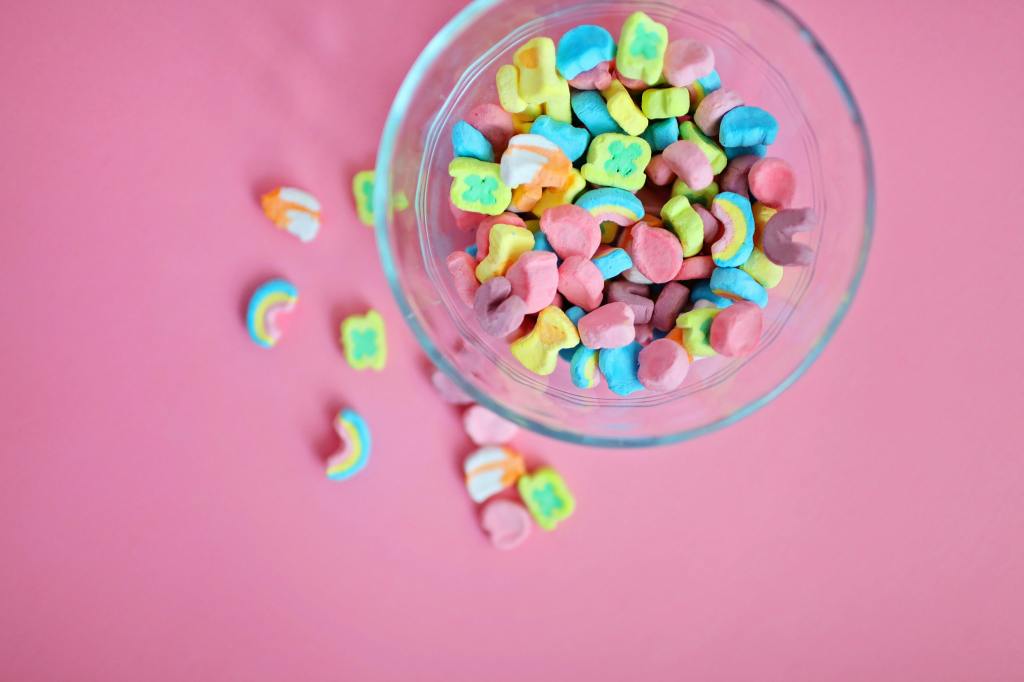
Kraft Jet Puffed Marshmallows, for example, contain Red 40, Yellow 6, and Blue 1.
Red dye 40 also contains a chemical called benzene, which is known to be cancer-causing.
Researchers “found tumor growth in animals that consumed high doses of food dyes though it can be hard to translate what this means for kids. Some studies say the small amount of benzene in the dyes couldn’t pose a high risk,” said Registered Dietician Julia Zumpano in an article by Cleveland Clinic.
Interestingly, the study “Toxicology of food dyes” linked in the Cleveland Clinic article explicitly states in its conclusion that “the inadequacy of much of the testing and the evidence for carcinogenicity, gentoxicity, and hypersensitivity, coupled with the fact that dyes do not improve the safety or nutritional quality of foods, indicates that all of the currently used dyes should be removed from the food supply and replaced, if at all, by safer colorings.”
The study exhorts regulatory authorities to “require better and independent toxicity testing, exercise greater caution regarding continued approval of these dyes, and in the future approve only well-tested, safe dye.”
With all the knowledge available to us about artificial dyes, Dr. Amen urges his listeners to “be very thoughtful about what you put in your body and what you allow in your children’s bodies. So read the labels. Go natural.”
—————
Edited to add:
The push to ban artificial dyes by food activists, moms, and other influencers who do not have a scientific background has caused, and is continuing to cause, frustration for some scientists who believe the way information about artificial dyes is being presented is “fear mongering.”
“The allegation that we are being fed petroleum disguised as food dye is blatantly absurd,” said Dr. Joe Schwarcz of the Office for Science and Society in 2017 in response to Lisa Leake, a mom and food blogger who claimed in 2013 that “food manufacturers [are] feeding us petroleum based chemicals disguised as brightly colored food dyes.”
However, unless Leake edited her article, Schwarcz actually misquotes her. She states the chemicals are “petroleum based” as quoted above. In his response article, Schwarcz quotes her as saying “food companies are feeding us petroleum disguised as brightly colored food dyes.”
Saying that artificial dyes are “petroleum based” allows for the understanding that different petroleum-based products can have entirely different chemical compositions but brings attention to the product’s origin, which is where Schwarcz appears to find issue.
Schwarcz explains that the molecular structures found in food dyes “are dramatically different” than the ones found in petroleum, claiming that “the safety of a chemical does not depend on its ancestry, but on its molecular structure.”
Having said this, there is also something called the “precautionary principle” in food regulation, which “states that even if there is no proof of harm, a chemical with some potential for harm should be replaced if a safer alternative is available,” says Schwarcz.
 Kitchen Counter Conversations
Leave a comment